From Gettysburg to Antarctica, military Bibles reveal prayers of families who sent loved ones to war
From Gettysburg to Antarctica, military Bibles reveal prayers of families who sent loved ones to war
For generations of American heading into the unknown, one of the most important things tucked into a uniform pocket was a Bible.
Some returned battered from war, while others read heartfelt prayers written by family members hoping their sons and husbands would come home. One type was encased in metal and carried over a soldier's heart.
Another traveled to the frozen reaches of Antarctica, sharing Scripture to the very ends of the world.
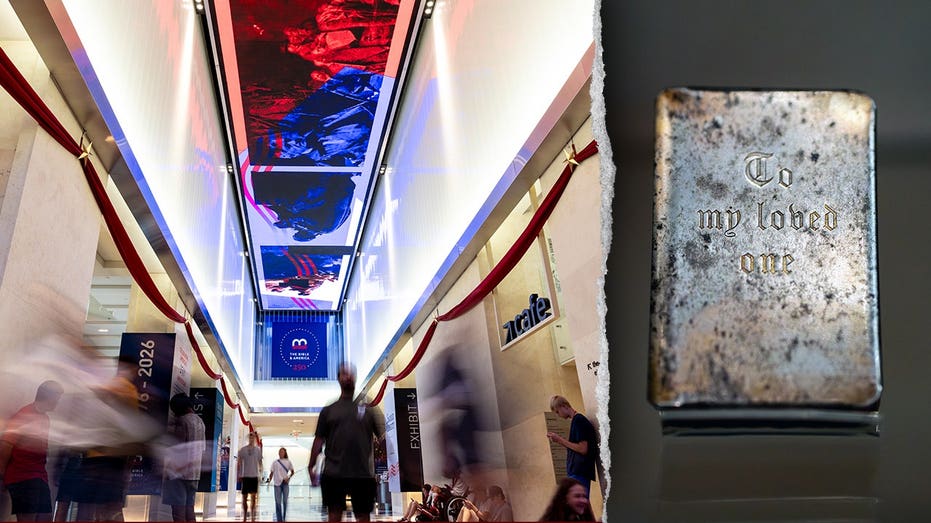
Now, as the U.S. marks since the Declaration of Independence, the Museum of the Bible's "Bible in Times of War" exhibit is using those surviving artifacts to trace how American service members turned to God's Word for strength and hope through generations of conflict.
THE DAY AFTER MEMORIAL DAY, AMERICAS DEBT TO THE FALLEN STILL REMAINS
Wesley Viner, an early modern curator at the and Marine veteran who curated the special display in , told Fox News Digital that some of the most powerful stories preserved in the collection belong not to famous generals or celebrated heroes, but to ordinary Americans whose names may have otherwise disappeared from history.
Among the most recognizable artifacts are so-called "Heart Shield Bibles," small, pocket-sized Bibles with thin metal covers carried by some American service members during and into the Korean War.
The Bibles were frequently purchased by relatives for departing service members and designed to fit into a breast pocket over the heart, helping fuel stories that the metal-covered books could theoretically stop a bullet.
Viner, however, said the truth is less cinematic.
The thin metal covers were rather unlikely to stop World War II-era ammunition traveling at high speed, he said, though he would not rule out the possibility that one could have protected a service member from shrapnel or flying debris.
"Many of the tales that surround the 'Heart Shield Bibles' are likely a bit exaggerated," Viner said.
But whether the books literally stopped bullets may obscure what they represented to the families who sent loved ones to war.
"It was a source of protection. It was a source of strength. It would keep them safe," Viner said, describing the metal shield as largely symbolic.
Some of the most affecting evidence of that hope survives in heartfelt handwriting inside the covers.
Viner said small pocket Bibles were produced on a large scale during the first half of the 20th century, allowing families to purchase them for sons, brothers and husbands preparing to deploy.
"To my dear boy, may God keep you safe," one note reads.
Another simply says, "praying for you at Christmas."
In many cases, Viner said, historians do not know who wrote the messages or who received them. He said the anonymity can make them even more powerful.
"As I read those, I think about how profound and serious and meaningful that was for the family members who sent their kids, their loved ones off to war and gave them this as they left," Viner said.
More than 80 years before the "Heart Shield Bibles," another now-tattered Bible traveled with a Union soldier whose life Viner was able to partially reconstruct because of the book he left behind.
FREEDOMS ARE NEVER FREE: A JEWISH AMERICAN SOLDIER BURIED WITH NAZIS FINALLY LAID TO REST WITH US TROOPS
John Weissenheimer served in the 107th Ohio Volunteer Infantry, a largely German-speaking unit that endured bloody Civil War battles, including Gettysburg, according to Viner. Weissen
 23.9c
23.9c