COP31 breakdown exposed a deepening Global South-West rift over climate transition
COP31 breakdown exposed a deepening Global South-West rift over climate transition
For India and other developing economies, COP31 reinforced the argument that shared climate goals cannot come at the expense of energy security and development needs
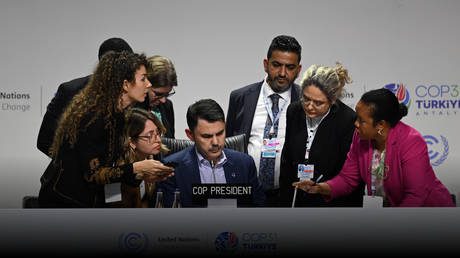
Negotiators at the spent two weeks searching for an agreement that could satisfy nearly 200 countries. to moving away from fossil fuels disappeared from the proposed agreement, while an earlier $120 billion adaptation-finance target was also dropped. Yet these failed to secure a compromise.
ended without an overarching political agreement, exposing divisions extending beyond coal, oil, and gas. Countries remained divided over the pace of decarbonization, the financing of alternative energy systems, and the extent to which global commitments should reflect national circumstances.
For India, COP31’s breakdown reinforces a long-standing concern that global climate ambitions must accommodate the energy security and development priorities of emerging economies. The failure to reach an agreement in Antalya shows how difficult it remains to reconcile these competing demands.
Why fossil fuels are there to stayAt COP28 in Dubai, countries agreed to contribute towards transitioning away from fossil fuels in energy systems in a just, orderly, and equitable manner. Three years later, negotiators were still divided over what this commitment should mean in practice.
In Antalya, the European Union and climate-vulnerable countries pressed for stronger language on fossil fuels. Major petroleum-producing economies resisted a prescriptive phase-out approach, while developing countries questioned whether additional commitments would adequately recognize their financing and development requirements.
These differences reflect competing economic interests. For oil exporters, the transition threatens future hydrocarbon revenues. For import-dependent countries such as India, reducing fossil fuel consumption offers long-term benefits, but replacing existing energy infrastructure carries substantial costs.
The International Energy Agency’s , released during the summit, illustrates this tension. Under its Stated Policies Scenario, global oil demand levels off at approximately 103 million barrels per day around 2030 before declining gradually. Natural gas demand continues growing into the mid-2030s.
These projections show how gradually global energy systems are likely to evolve under current and announced policies. But the 2026 disruption of energy flows through the Strait of Hormuz underscored a far more immediate risk. Described by the IEA as the largest energy supply shock in history, the crisis exposed the vulnerability of countries dependent on oil and gas imports transported through strategic maritime chokepoint
The crisis has also reinforced the energy security case for electrification. According to the , electric car sales in India roughly doubled during March-June compared with the same period in 2025. Separately, that India’s electric two-wheeler sales reached 192,023 units in March, up 47.4% year-on-year. Although these dynamics cannot be attributed solely to the disruption, they show how electric mobility is gaining ground as countries seek to reduce their exposure to volatile oil markets.
The challenge extends beyond energy security. A November 2026 study by the (CEEW), examining 21 submissions representing 115 countries, found broad recognition of the need to transition away from fossil fuels. Yet disagreements persisted over financing, technology, and implementation.
These differences help explain why agreement on reducing fossil fuel dependence has proved easier than reaching a consensus on how quickly countries should act and what support they need.
India’s case for energy transitionThe differences over financing, technology, and implementation were also reflected in India’s intervention in Antalya. In his , Environment Minister Bhupender Yadav emphasized equity, historical responsibility, and Common but Differentiated Responsibiliti