South Africa releases state land to black farmers
South Africa releases state land to black farmers
Black producers account for only around 10% of commercial farming output, President Cyril Ramaphosa has said
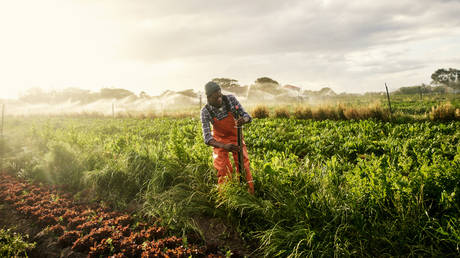
South Africa is releasing about 2.5 million hectares of state-owned land to black farmers and providing title deeds to expand their role in commercial agriculture, President Cyril Ramaphosa has said.
In his weekly letter to the nation, Ramaphosa said expanding access to land, financing and agricultural training was essential to transforming the sector, creating jobs and strengthening South Africa’s food security.
The first step in building a new generation of South African farmers is providing them with titled access to land, he said. Through the Proactive Land Acquisition Strategy, the government is releasing the land in various parts of the country to black farmers, Ramaphosa added.
The president stressed, however, that access to land needed to be accompanied by funding, skills development, mentorship and technology to help emerging farmers establish commercially successful businesses. Far too often, emerging farmers are kept trapped at subsistence level because they cannot get the financing they need for farming inputs, infrastructure and additional land, he said.
Ramaphosa cited Redlands Farm, a commercial dairy farm in Stutterheim in the Eastern Cape owned and run by young black farmers, as an example of how financial support could help farmers expand their operations. Redlands’ success shows that with effective partnerships, a transformed agricultural and agribusiness sector can boost the rural economy and create jobs.
The farm has grown its operations with assistance from the Land Bank and is a beneficiary of its Blended Finance Scheme, which combines government grant funding with loan finance. The president encouraged more lenders and agribusinesses to participate and develop additional funding instruments for farmers.
Ramaphosa noted that South Africa’s agricultural sector had more than doubled since 1994, with record exports of R270 billion in 2025, making the country the world’s 32nd-largest agricultural exporter. The country exports products including table grapes, maize, beef, wine, citrus, sugar and wool. Nearly half of its agricultural exports go to other African countries, while the remainder reaches markets in the European Union, Asia, the Middle East and the Americas.
However, the sector’s growth had not benefited all communities equally. We still have what has been called ‘two agricultures’. Predominantly white-owned commercial farms account for the bulk of the country’s commercial farming output, while black farmers only account for around 10%, Ramaphosa said.
The president warned that relying on a relatively small segment of the population to meet the country’s food needs was unsustainable as the population grew and demand for food increased. Ramaphosa added that transformation was necessary both to address historical inequalities and to ensure the country could meet future food demand.
Agriculture employs around 944,000 people, with a further 200,000 working across the broader value chain. The president cited a 2025 University of Pretoria study that found a strong correlation between investment in agriculture and poverty reduction. According to him, land ownership alone would not guarantee success, as farmers also needed practical experience and knowledge of crops, weather conditions and animal diseases.
Read more Pamaphosa highlighted the work of commodity organisations, including the Citrus Growers’ Association, Grain South Africa, the National Wool Growers’ Association, Potatoes South Africa, Red Meat Industry Services, the Milk Producers’ Organisation and Fruit South Africa, in supporting a more inclusive agricultural economy. As government, we are on a concerted drive to expand and diversify export markets for our agricultural products. We are engaging with agribusinesses and f







 29.8c
29.8c