Florida puts 77-year-old man to death for deputy's murder as state closes in on execution record
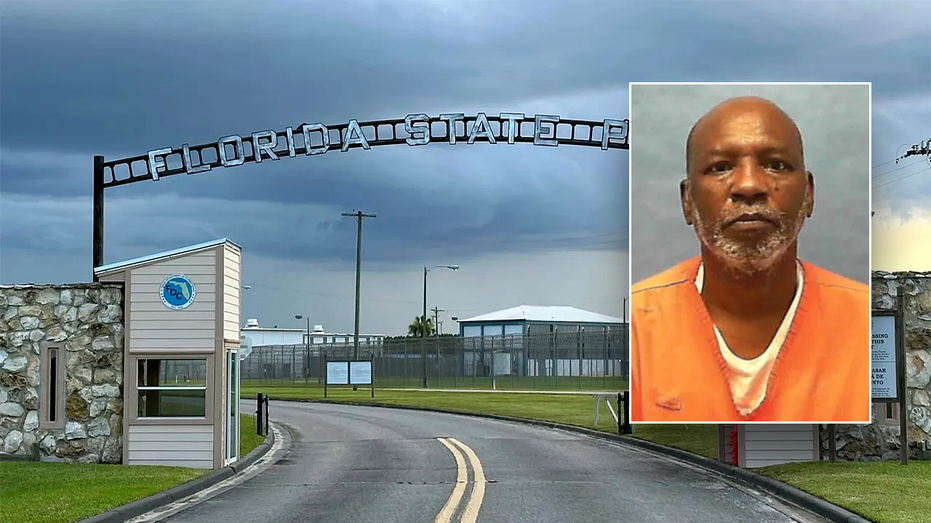
Florida puts 77-year-old man to death for deputy's murder as state closes in on execution record
A 77-year-old Florida man was executed on Tuesday for killing a sheriff's deputy more than 40 years ago, marking the Sunshine State's 18th execution of the year as Republican Gov. Ron DeSantis continues an accelerated pace of executions.
William Reaves was pronounced dead at 6:12 p.m. at Florida State Prison near Starke following a three-drug injection. He was convicted of first-degree murder in connection with the September 1986 shooting death of Indian River County sheriff's deputy Richard Raczkoski.
Reaves said he did not have any last words.
About 30 seconds after the injection began, Reaves took several big breaths and then stopped moving. A few minutes later, the team warden shook Reaves shoulders and shouted his name, but the man gave no response. A medic checked for a heartbeat or other signs of life, and Reaves was pronounced dead about a minute later.
FLORIDA EXECUTES INMATE WHO KILLED CELLMATE BECAUSE HE WANTED DEATH PENALTY
Raczkoski's brother, Marc, told reporters after witnessing the execution that his brother finally received justice, while Indian River County Sheriff Eric Flowers said that he viewed the execution as closure rather than justice.
"Would we all be so lucky to be 77 years old and to die so peacefully," Flowers said at a press conference. "Thats not justice in any way, in my opinion."
On Sept. 23, 1986, Raczkoski responded to a 911 call that Reaves had made from a payphone at a Vero Beach convenience store, according to court records.
After the deputy arrived at the scene and the two men began talking, a gun fell out of Reaves pants, officials said. The two men struggled over the weapon before Reaves eventually regained control of it.
Raczkoski was attempting to run away when Reaves shot him four times, according to investigators. He died from his wounds later that day.
Reaves was convicted and sentenced to death about a year after the shooting. The Florida Supreme Court later overturned the conviction due to a conflict of interest with the prosecutor and ordered a new trial. After the second trial, Reaves was again convicted and sentenced to death, and subsequent appeals were unsuccessful.
The U.S. Supreme Court denied Reaves request for a stay of execution and petition asking the court to review his case without comment on Tuesday.
TWO FLORIDA INMATES DIE IN RARE DOUBLE EXECUTION AFTER SCOTUS DENIES STAYS
The state Supreme Court also rejected Reaves appeals last week that sought to halt the execution.
His attorneys challenged Floridas three-drug lethal injection protocol. Executions in the state are carried out through the injection of a sedative, a paralytic and a drug that stops the heart, according to the Department of Corrections. The court has previously upheld the protocol against similar challenges.
Florida's method is different from the single-drug injection used in states like Tennessee, where death row inmate Christa Pike survived two doses of pentobarbital and was rushed to the hospital last month. Pike has since been released from the hospital and returned to prison.
Reaves' attorneys also argued that jurors who recommended the death penalty were never made aware that the U.S. Department of Veterans Affairs had rated the Army veteran as 100% disabled because of post-traumatic stress disorder linked to his service in the Viet


 15.2c